Living History on the Töss: River Cobbles for the Klostermühle Winterthur
The Klostermühle Winterthur bridges history and the present. The central element: classic Swiss river cobbles. An insight into how these stones strengthen the site's character through their natural patina and regional origin.
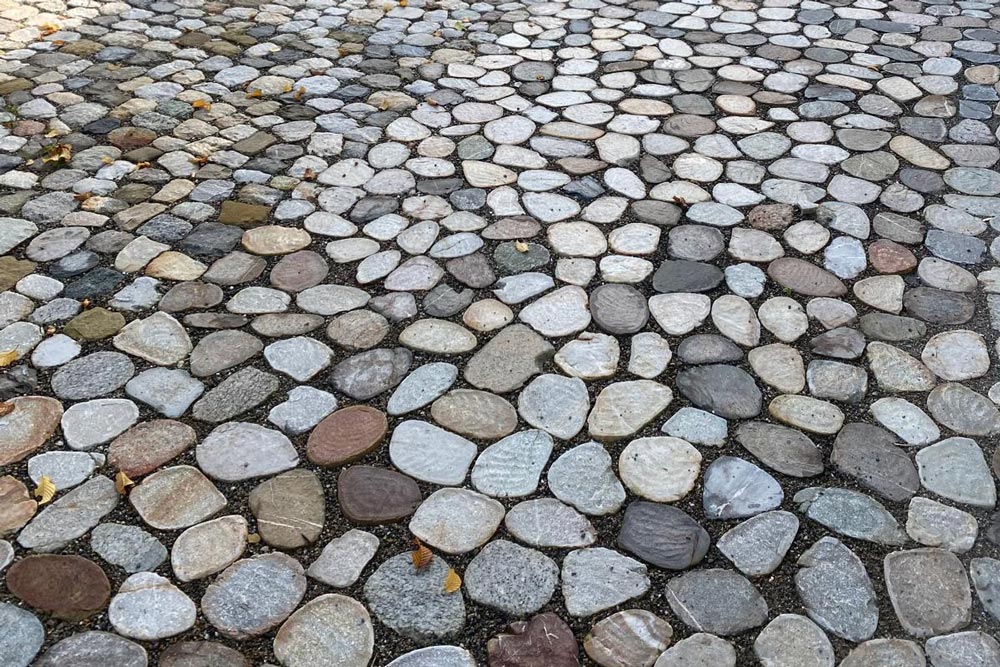
The Klostermühle in Winterthur-Töss is a place with "patina." Where hydropower and industry once dominated, people now live and dwell. When redesigning the outdoor spaces, the central requirement was not to cover this historical identity with sterile concrete surfaces, but to continue it with material-appropriate solutions.
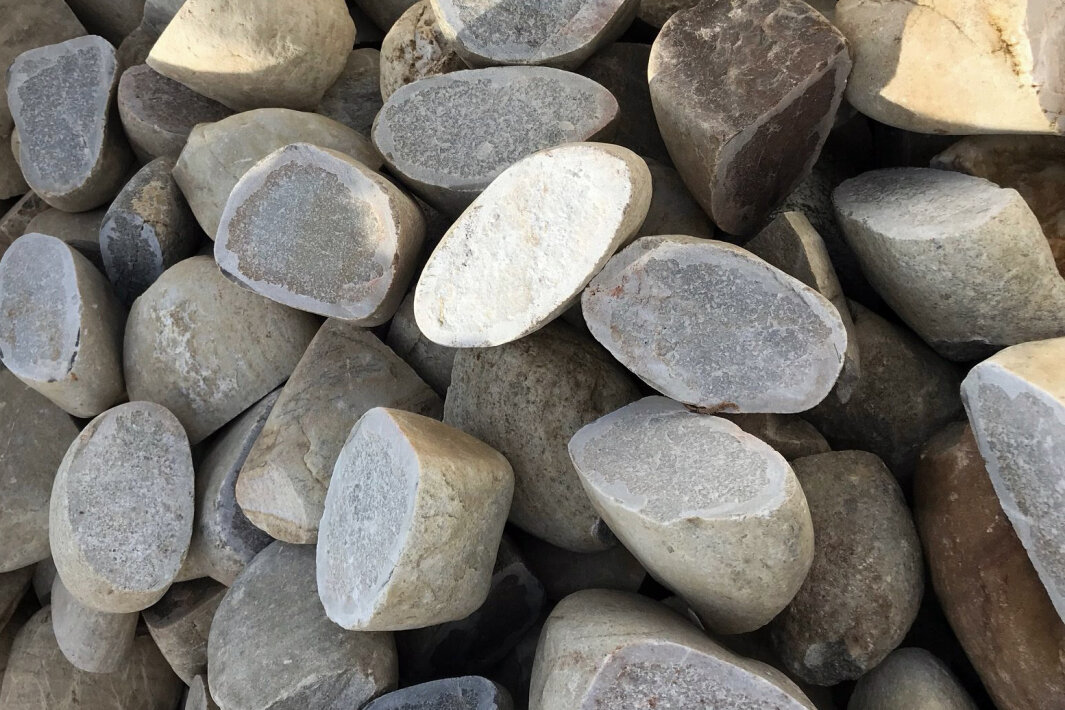
The Character of the "Cobble"
For this project, the choice fell on classic Swiss river cobbles, often called "cat's heads" (Katzenköpfe) in technical jargon. These stones stand out for their naturalness:
-
Visual Variety: Each stone is unique in size, color, and surface structure.
-
Lively Surface: Unlike industrially manufactured stones, laying these cobbles creates a dynamic joint pattern that breaks light and shadow.
-
Robustness: Granite and hard rock from flowing waters are extremely resistant to weathering and mechanical stress.
Craftsmanship for Eternity
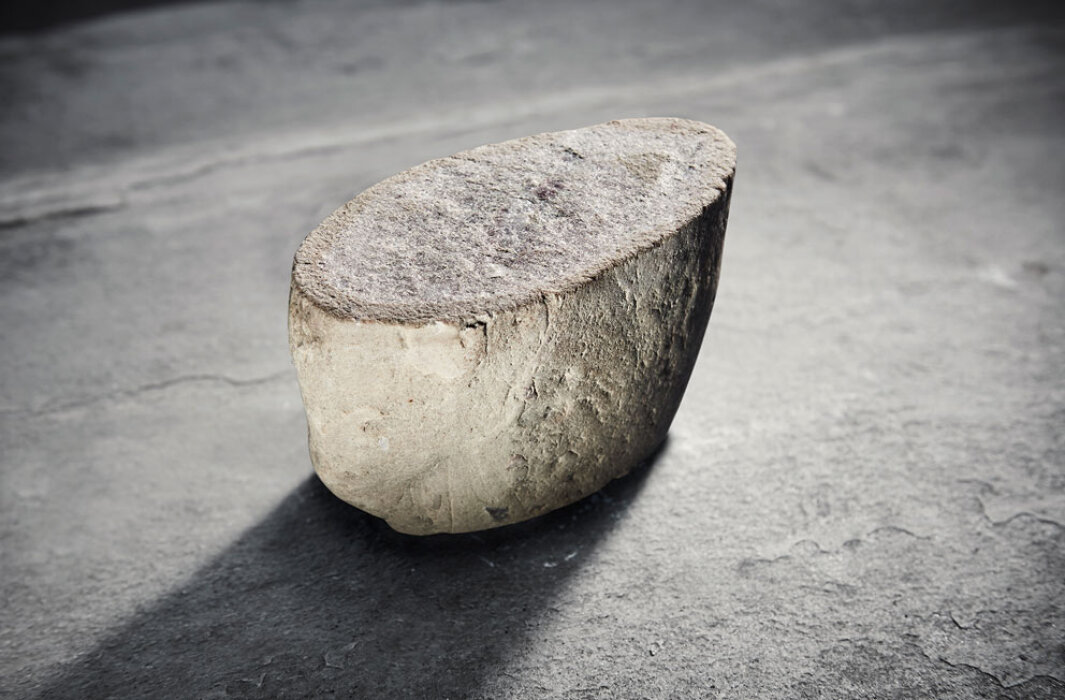
Laying raw river cobbles is a craft that requires experience. The stones must be set so that they form a "balanced unity" despite their different shapes. In the Klostermühle, the stones were used to design courtyards and paths that invite people to linger. They visually and acoustically decelerate the space and fit perfectly with the massive architecture of the surrounding buildings.
Short Distances, Great Heritage
The use of regional river cobbles is lived environmental protection.
-
Regionality: The material comes from Swiss waters and gravel works, reducing transport routes to a minimum.
-
Circularity: Natural stone is a material that is not "consumed." It ages with dignity and could theoretically be removed and reused in 100 years – entirely in the spirit of Otto Meyer's circular economy.
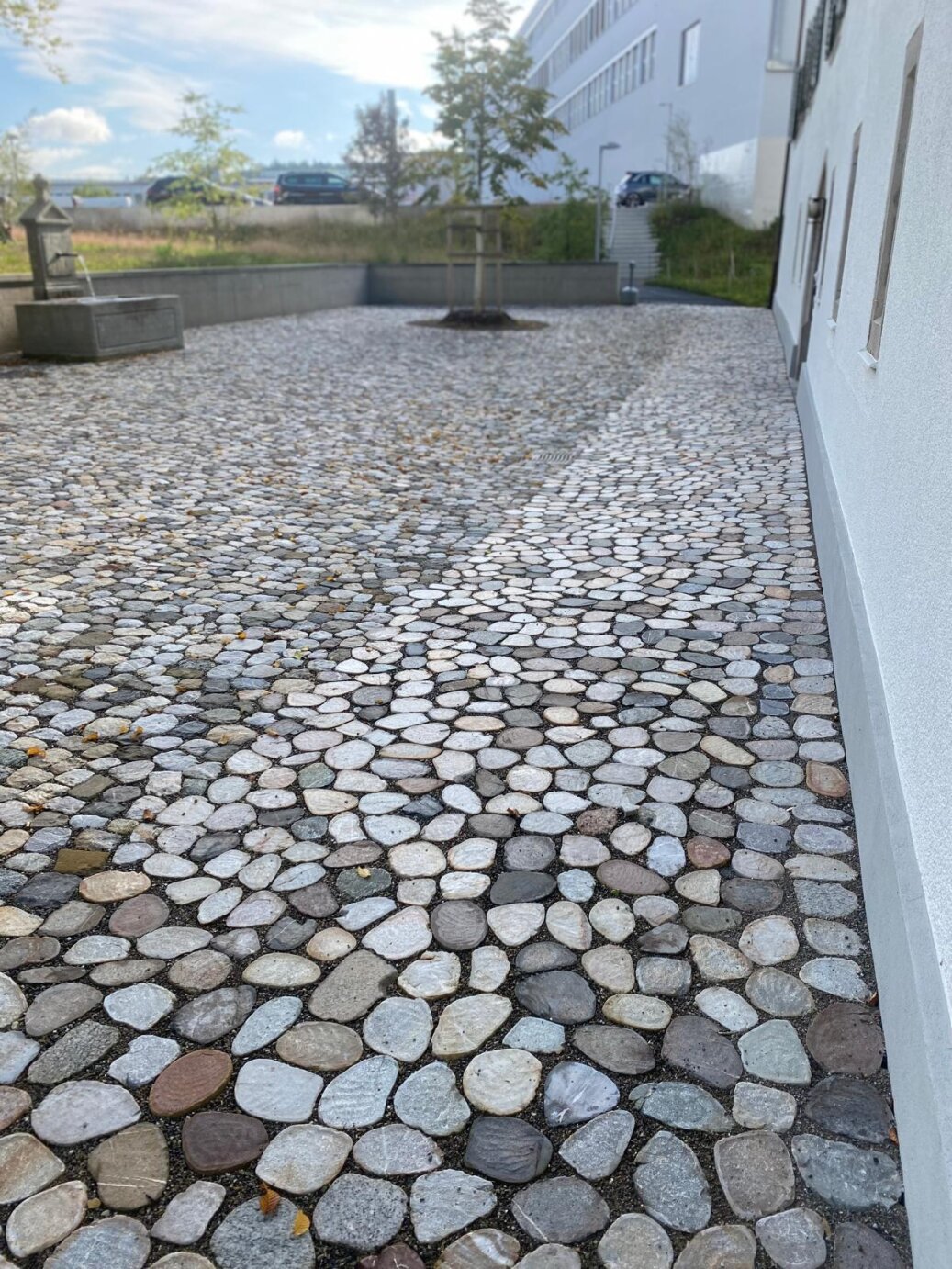
Grounded Authenticity: Swiss river cobbles at the Klostermühle Winterthur.